It’s only a couple of days into Semana Santa, or Holy Week, and already the streets are busier and the restaurants have set out the pricier menu editions to commemorate the holiday. We’ve heard that the more extravagant of the festivities don’t start until Thursday, though the spirit of the holiday is clear to see. The most prominent feature of the approach of Easter is the bustling processions marching down the streets daily. The churchgoers walk down the narrow streets, from their parish, to the cathedral, and back, their journey watched by many people on the streets.
Those traveling are easily distinguished from the crowds through their outfits – a cloak, belt, and long pointed hoods – capirotes. Adults are usually clad in all black costumes, though what the kids wear vary in each church. Some I’ve seen are in all white attire, when others clothes are black cloaks and white hoods, and vice versa. Sometimes the hoods are brighter colors, such as purple and green, though I’ve found they’re not as common. When walking down the Sevillian streets, away from the main Cathedral, we came across a store advertising procession outfits. This seemed to prove that though the parishes have their own specific style, they might not provide the outfits.
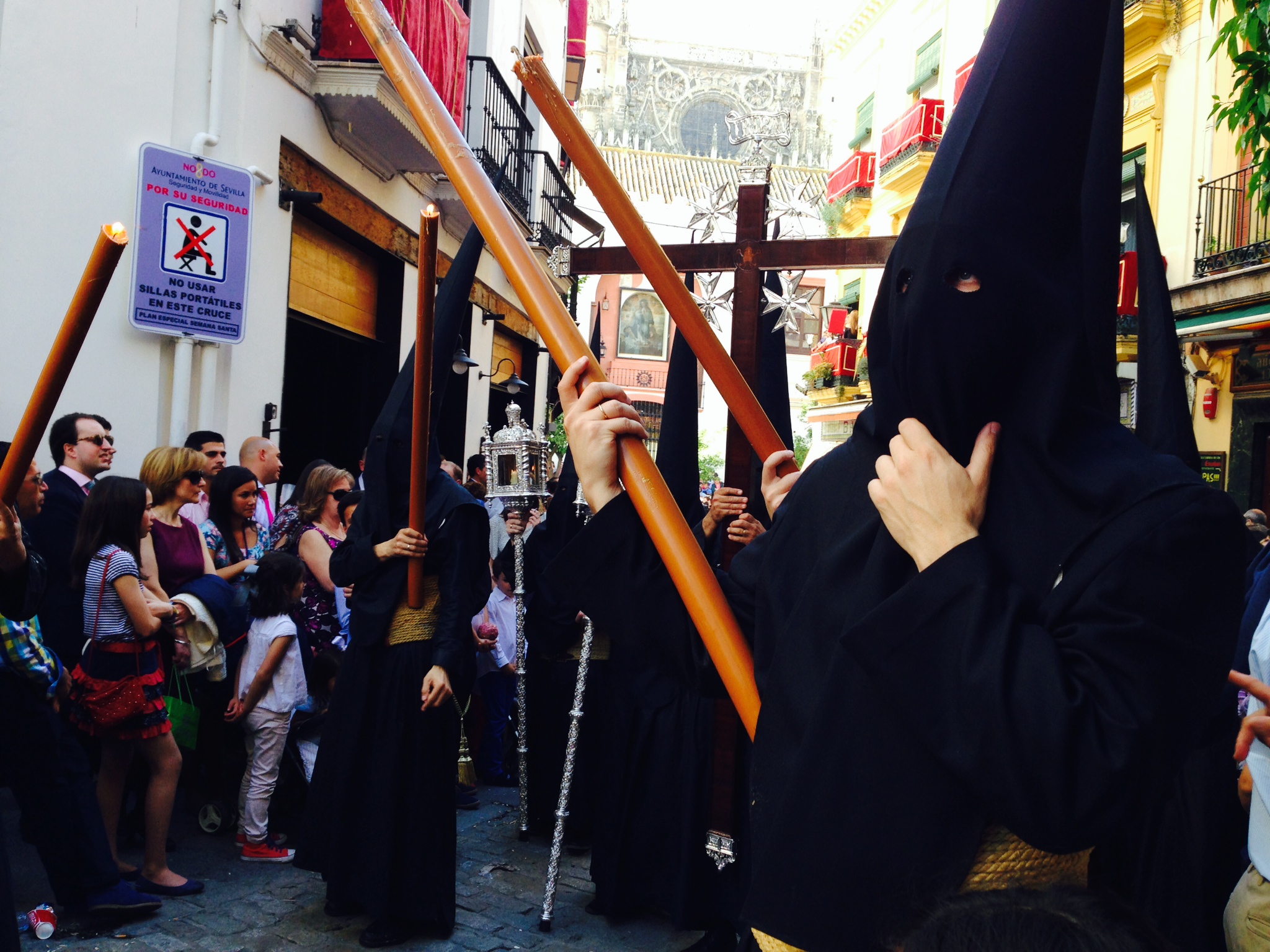
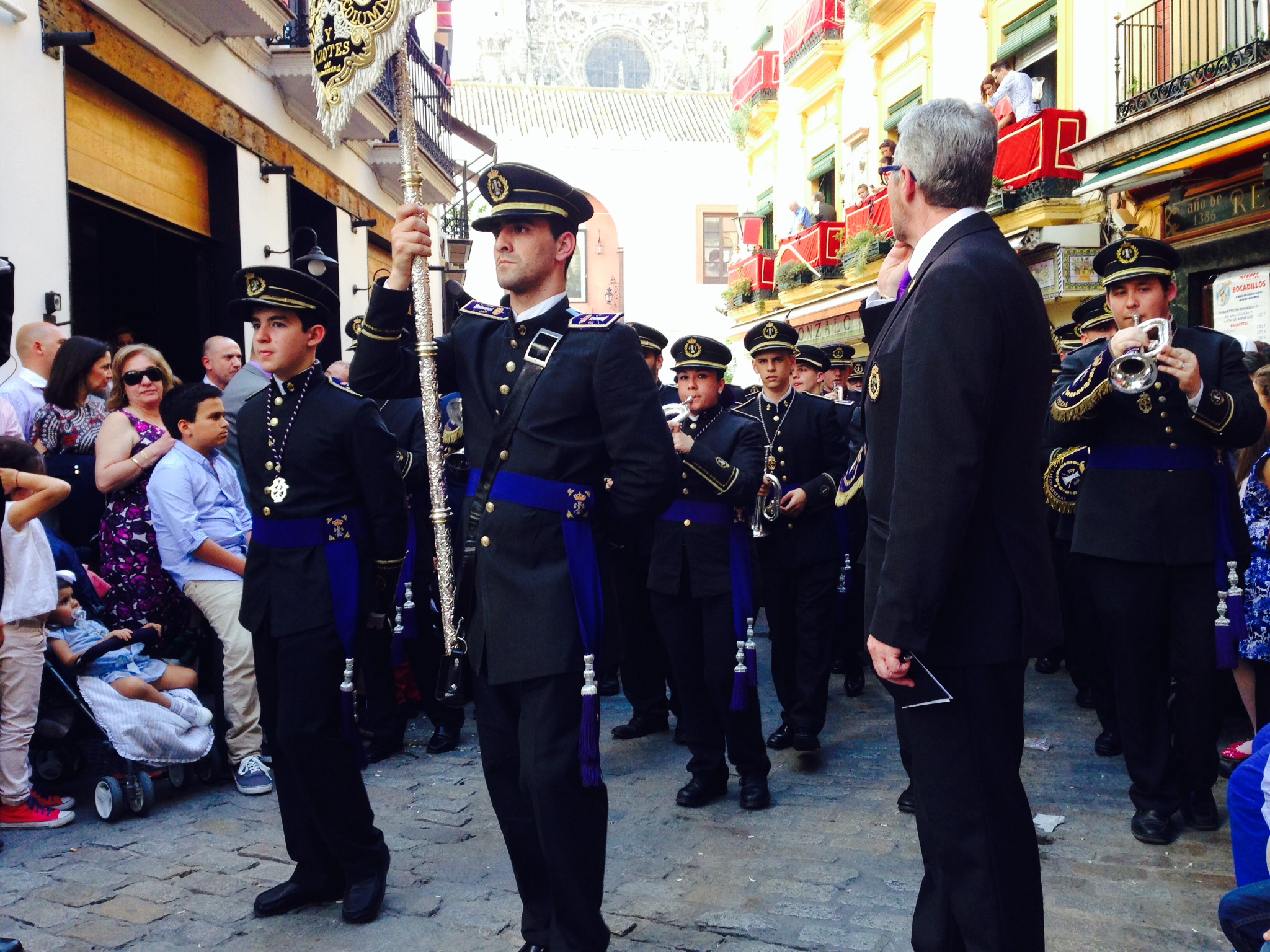
The processions are started by a marching band, consisting of trumpets, percussion, and what I believe are mellophones. There’s around 20 of each brass instrument, and 25 percussionists, and the sound of the drums can be heard from streets away. The song they play can range anywhere from somewhat upbeat to solemn, depending on the theme of the procession. Next comes the cross, followed by large groups of kids carrying candles. There’s around 200 in the ones we’ve seen, though there are rumors that the major ones go into the thousands.
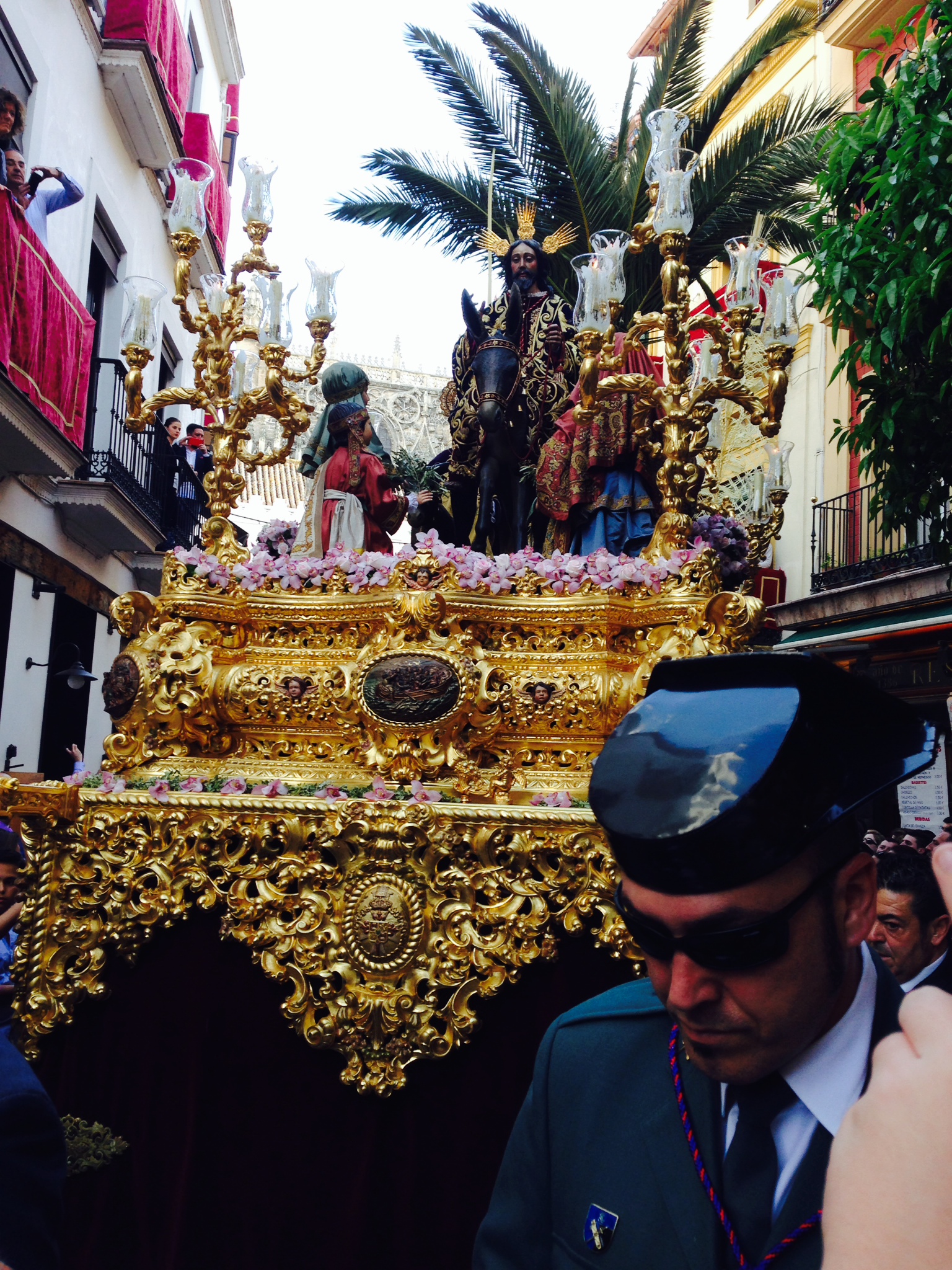
The float, or pasos, is believed to be the most important part of the processions. It’s said that there can be several floats in a procession, though we’ve only been to those with a single float. The pasos are incredibly detailed, and are quite beautiful. It really shows a lot of effort, in everything from the realistic decor to the elaborate metal-looking carvings down the sides. The floats are topped with a scene from the biblical Holy Week, from Jesus entering Jerusalem, to his resurrection. The floats are followed by another band, of around the same size, playing a song that, in a way, shows the emotion the float’s meant to display.

The processions are clearly a major part of Easter in Spain. The pasos go on display in each church, and it seems like most of the city comes out to watch. Through the marching bands, distinct outfits and decorative floats, a sense of the holiday easily comes.