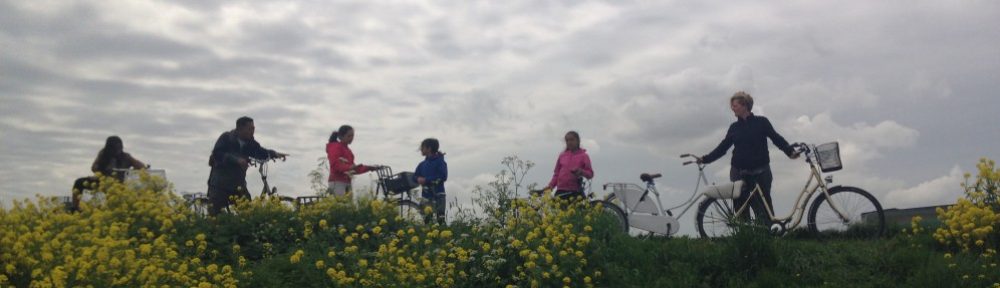
As an early birthday present my parents took my sisters and I to the Chocolate Museo, to learn how to make chocolate. There are 3 main parts to making the chocolate;
- Harvesting- The bean pods are ready to harvest when they are yellow. The brown pods are overripe, and if the pods are red you tap on them to see if they’re hollow. If the red pods are hollow those beans are ripe. To harvest them you don’t need a knife or machete because the beans are harvested by twisting them at the stem until they come off the tree. The cacao trees are slightly different than other fruit, instead of the fruit growing up in the branches it grows on the trunk. If you do use a knife to remove the pods you could cut the tree. If the trunk is cut that area of the trunk will never bear pods again. It’s like if you cut of a branch to an apple tree, that branch won’t bear fruit anymore.
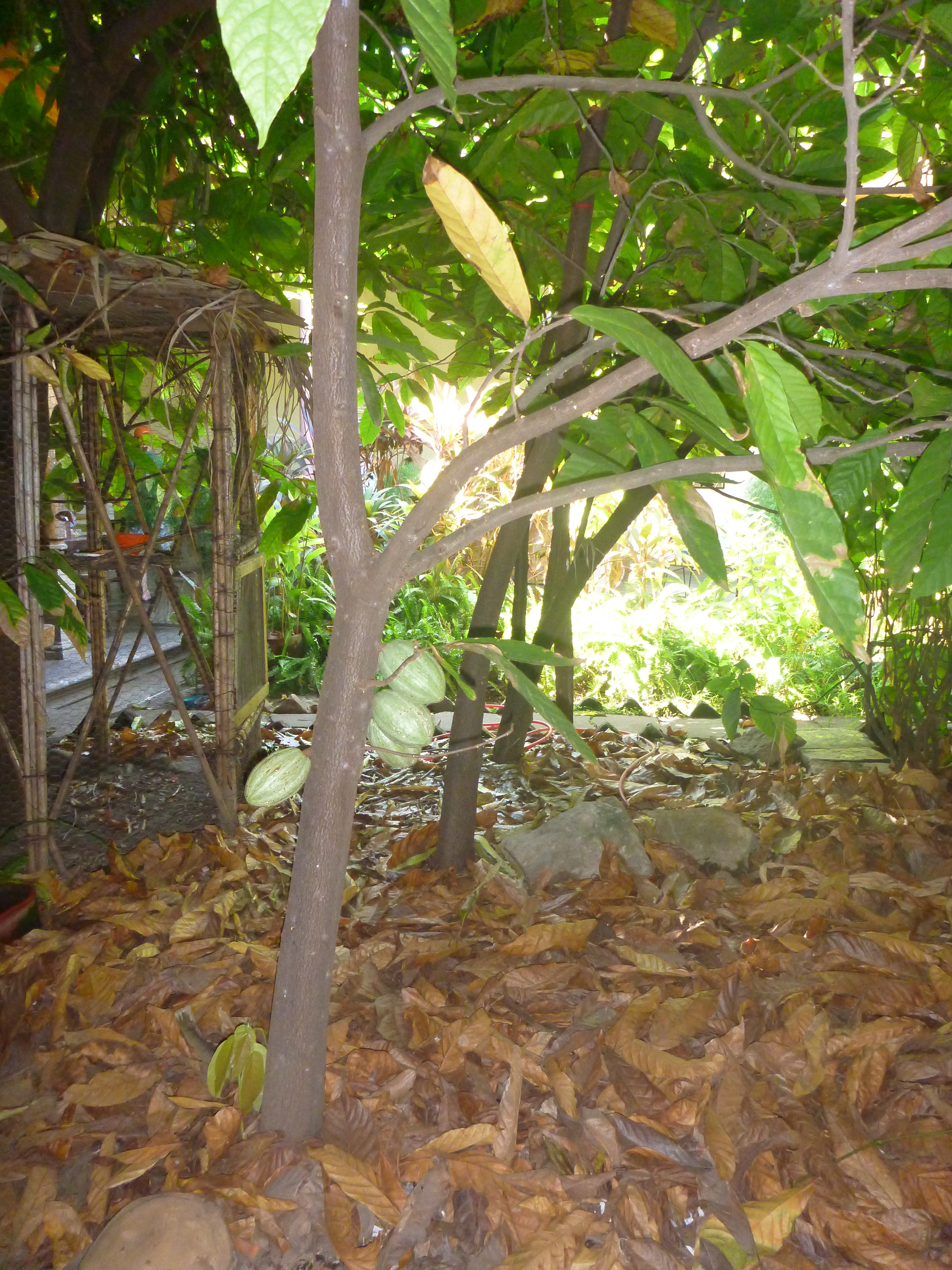
cocoa pods growing on the lower trunk
- Roasting/Peeling– After the pods are harvested, then the beans are roasted for 10-15 minutes over a large fire while being constantly stirred. While we were stirring the beans we had to chant an “ancient” Mayan chant so they would roast faster. It went like this: Baté Baté Chocolaté. After they’re taking off the fire they need to be peeled. They were really hot!! To remove the husks we could either twist and pull off the husk, or crush with the heel of your palm and then remove the husk. After they were all husked it was time for step 3.
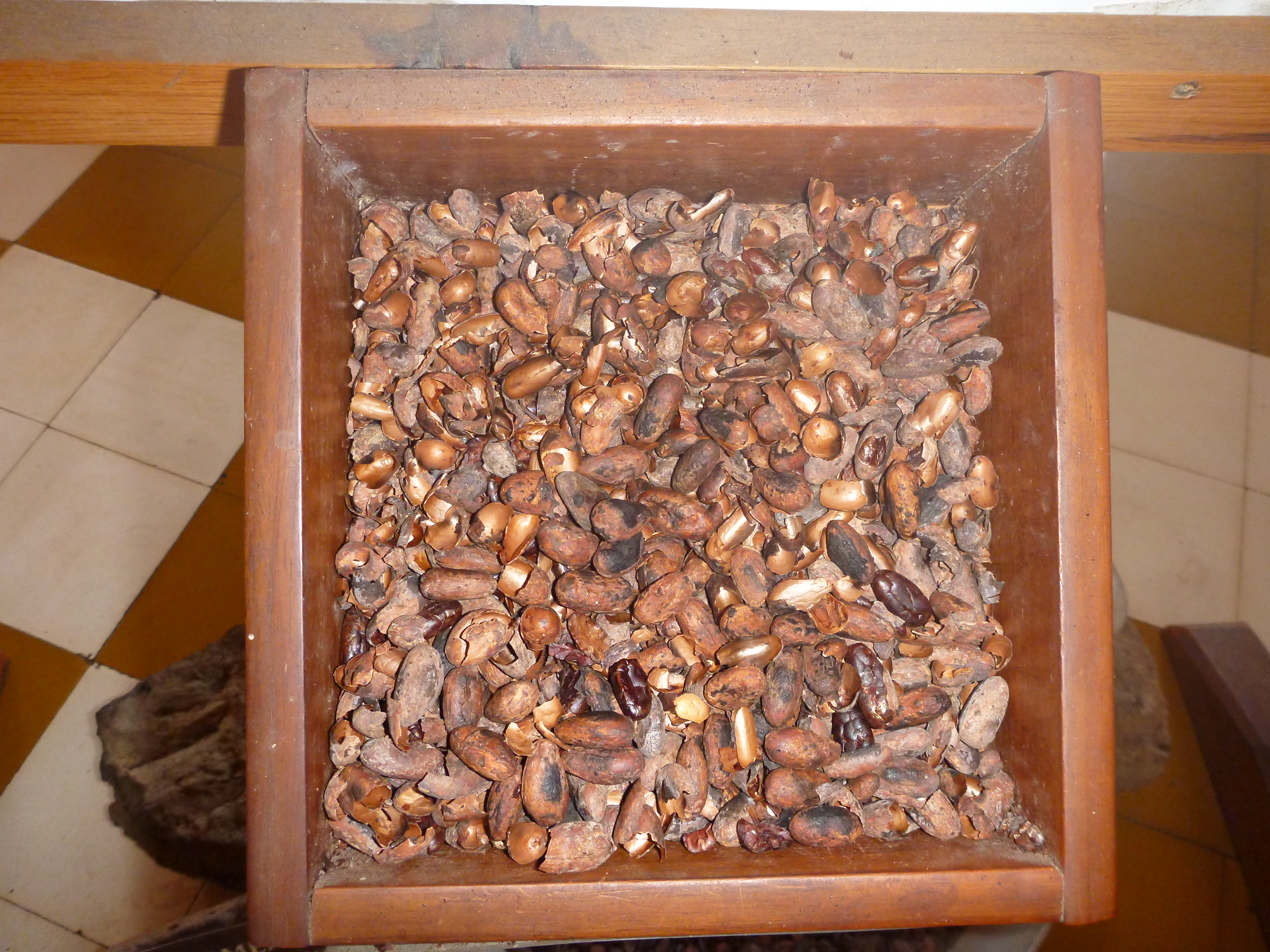
3. Grinding- to grind the beans we used a mortar and pestle. We had to grind them into a paste. It was a paste instead of a powder because the beans are 40% cocoa powder and 60% cocoa butter. Because we were using the mortars and pestles it took a while for us to get it to a paste if we could do it at all. The paste is called chocolate liquor. With the chocolate liquor you can make drinks or chocolate bars.
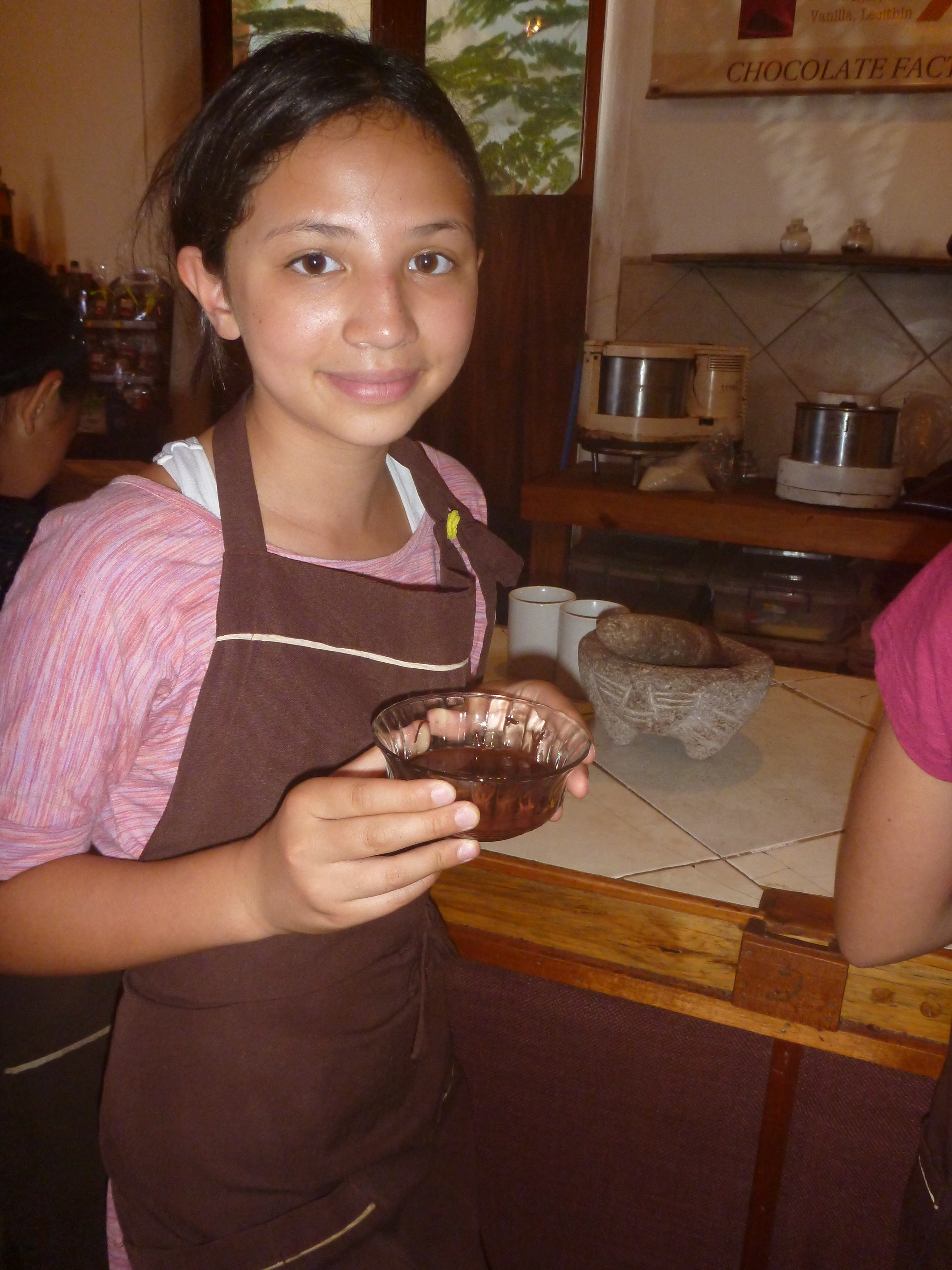
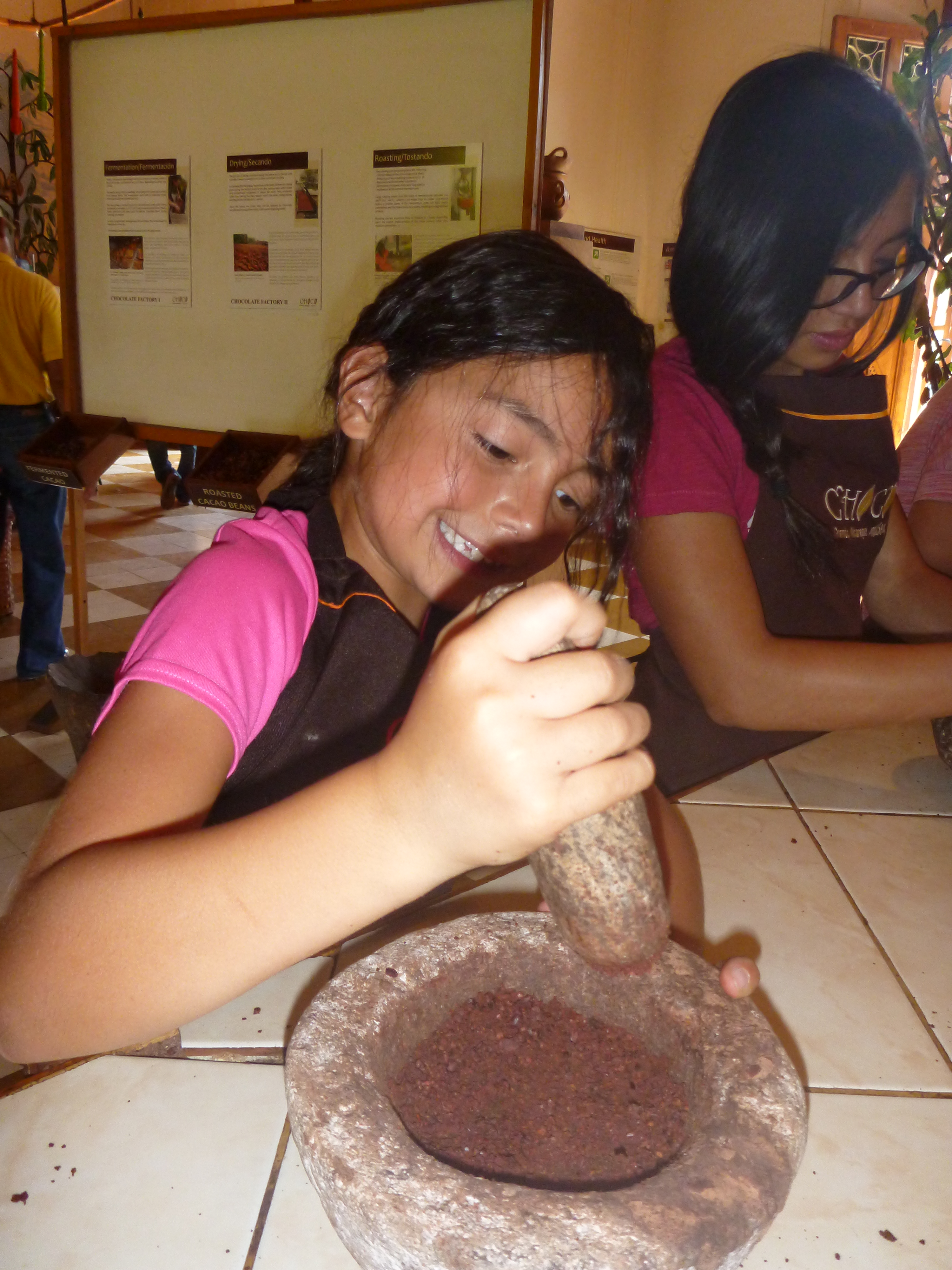
While we were there, we made 3 different chocolate drinks: the Mayan one, the Aztec one and the European one. The Mayan one was made with the cocoa paste, water, honey, black pepper, and cinnamon. It was bitter and very different from the cocoa we drink today. The Aztec one contained cocoa paste, water, cinnamon, honey, chile,vanilla and black pepper. This one was my favourite because of the spice from the chilies, and the vanilla gave it a vibrant taste. The last one we made was the European drink. This one was made with milk, cocoa paste, sugar and cinnamon. This was is very similar to the one we drink today rich, creamy and sweet. To stir the drinks we used a tool similar to a whisk called a molenya. To use this tool you rub your hands together with the handle of the molenya in between them, causing it to spin back and forth. Therefore stirring the drinks. The Spanish introduced this wooden device to the native people.
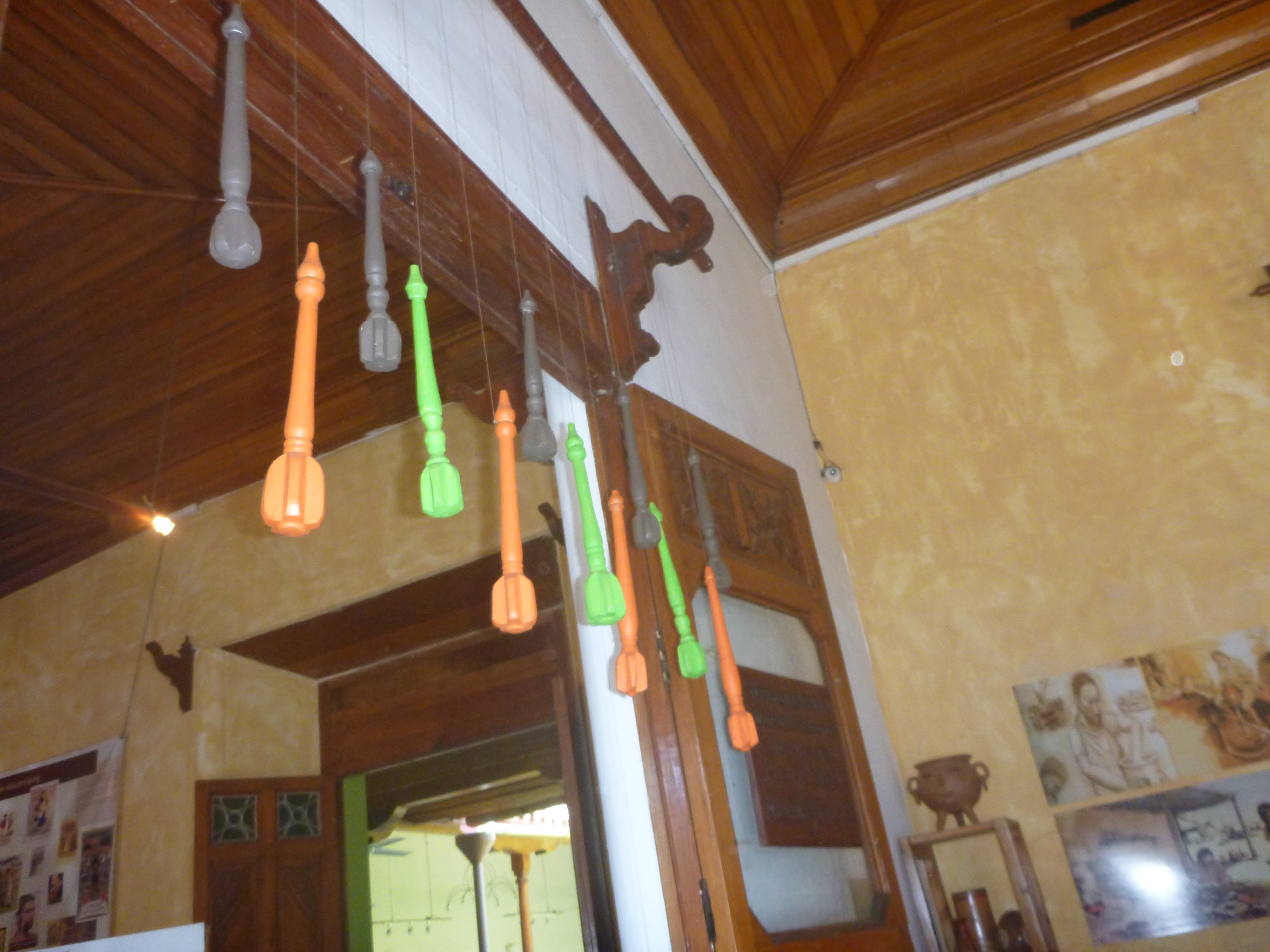
Molenyas
The last thing we did was make chocolate bars. The chocolate liquor used to make chocolate bars is mixed by a machine for 15 hours. In Switzerland it is mixed for 3 days. This mixing it what makes it smoother. We were giving very fine chocolate liquor in a bowl and marshmallows, m&ms cashews,coffee, almonds, sea salt, and cocoa nibs to add in. After it was mixed we put it in molds and they were put in the fridge there to harden for 2 hours. My chocolate bar had almonds and cocoa nibs, Ema and Isy added marshmallows, and Ori put marshmallows and m&ms in hers. They were really good.
Chocolate making is a lot of fun and it tells you a lot of different things about cacao trees, beans, and the bean pods. Some of the things there told us were: there are 20-60 cocao beans in a pod, or the bean pods are ripe when they are yellow. It was a very fun, interesting activity to try.
[polldaddy poll=8764367]~>Aly