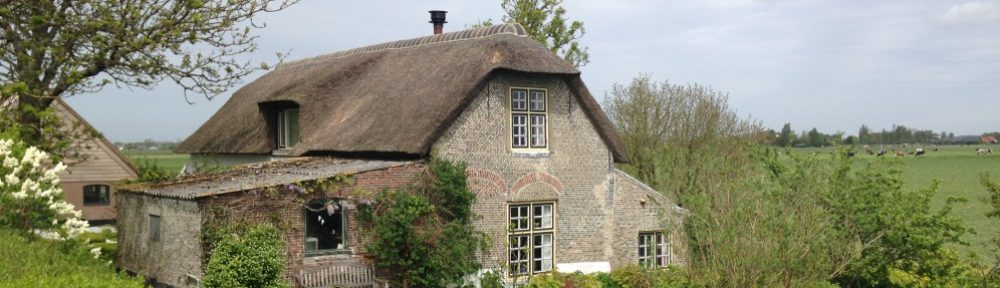
With the eruptions going on in Costa Rica and Guatemala, volcano’s are, right now, a pretty hot topic. There are actually two volcanoes within a half-hour of Granada, alone! Yesterday we went to one of them – Masaya Volcano. There’s several craters, or calderas, in the volcano, a couple of them active. You could walk right up to the mouth of some, and look down. However, it’s so gassy with hydrochloric acid, chlorine, and such, you can’t see very far, and you can only stay at the mouth of the crater for five minutes. It was still pretty interesting, though.
Inside the Volcano – Pretty Gassy
There’s three main volcano types – shield, cinder cone, and composite. Shield volcanos, like Mauna Hoa and Mauna Kei in Hawaii, are flatter, bigger, made from what used to be fluid lava flows, and fairly common. Cinder cones are a shaped like a stereotypical volcano, the most common type of volcano (according to some) and often made from ash of previous explosions. Examples could include Tantalus, in Hawaii, and Concéption on Ometepe, here in Nicaragua. Lastly, composite volcanoes are made from the remains of many eruptions – they’re also called strato-volcanoes. Mt. St. Helens and Mount Fuji are famous examples of these.
Theories on why volcanoes erupt have developed a lot over the years. At first, many groups of indigenous peoples believed there were gods who lived in volcanoes. When the gods got angry, the volcano would erupt, and so human sacrifices were made in attempts to keep the god content. Later on, an idea was developed that in the ocean, the water acts as a magnifying glass, and melts the rock on the ocean floor. The magma is then ejected through holes in the ground. We know now that can’t be true, as light doesn’t reach the bottom of the ocean, but back then it was a common theory.
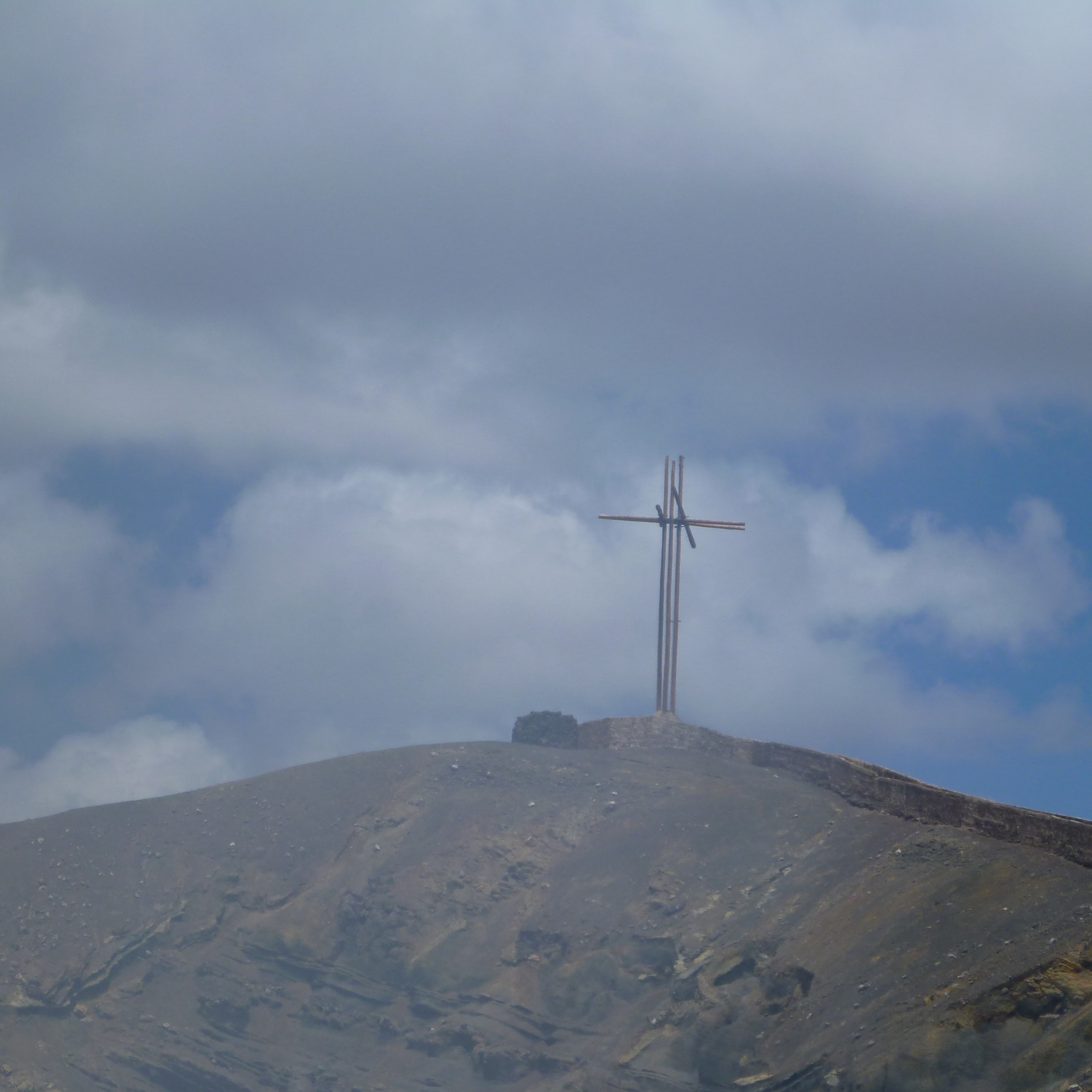
Mayasa Volcano : cross placement was once site of human sacrifice
We know now how volcanoes are made, and how eruptions are caused by magma being fluid and trying to bubble to the surface. We know that the moving o the tectonic plates means there’s more volcanoes in the Pacific ‘Ring of Fire’ than most of the rest of the world. We know how to use seismographs to track earthquakes, and how earthquakes affect volcanoes. We know how much damage volcanoes have done in the past, and how to stop so many people from dying in the next major eruption. Volcanoes can be awfully scary, but they’re still pretty cool.